


A UNESCO-Recognized Masterpiece of the Oral and Intangible Heritage of Humanity
In a world where traditions are often simplified for tourists, the Carnival of Binche stands apart.
Recognized by UNESCO in 2003 as a Masterpiece of the Oral and Intangible Heritage of Humanity, this carnival is not a spectacle created for visitors. It is a centuries-old ritual deeply embedded in the identity of the town of Binche, in Wallonia.
It is not a show.
It is a living tradition.
A History Rooted in the 14th Century
The origins of the Carnival of Binche date back to the Middle Ages. Over centuries, the tradition survived wars, political changes, industrialization, and modernization.
What makes it unique is its continuity.
The structure of the celebration has remained remarkably faithful to its historical form.
The carnival takes place each year in the days leading up to Lent, culminating on Shrove Tuesday (Mardi Gras).
But preparation begins long before.
The Gilles: The Soul of the Carnival
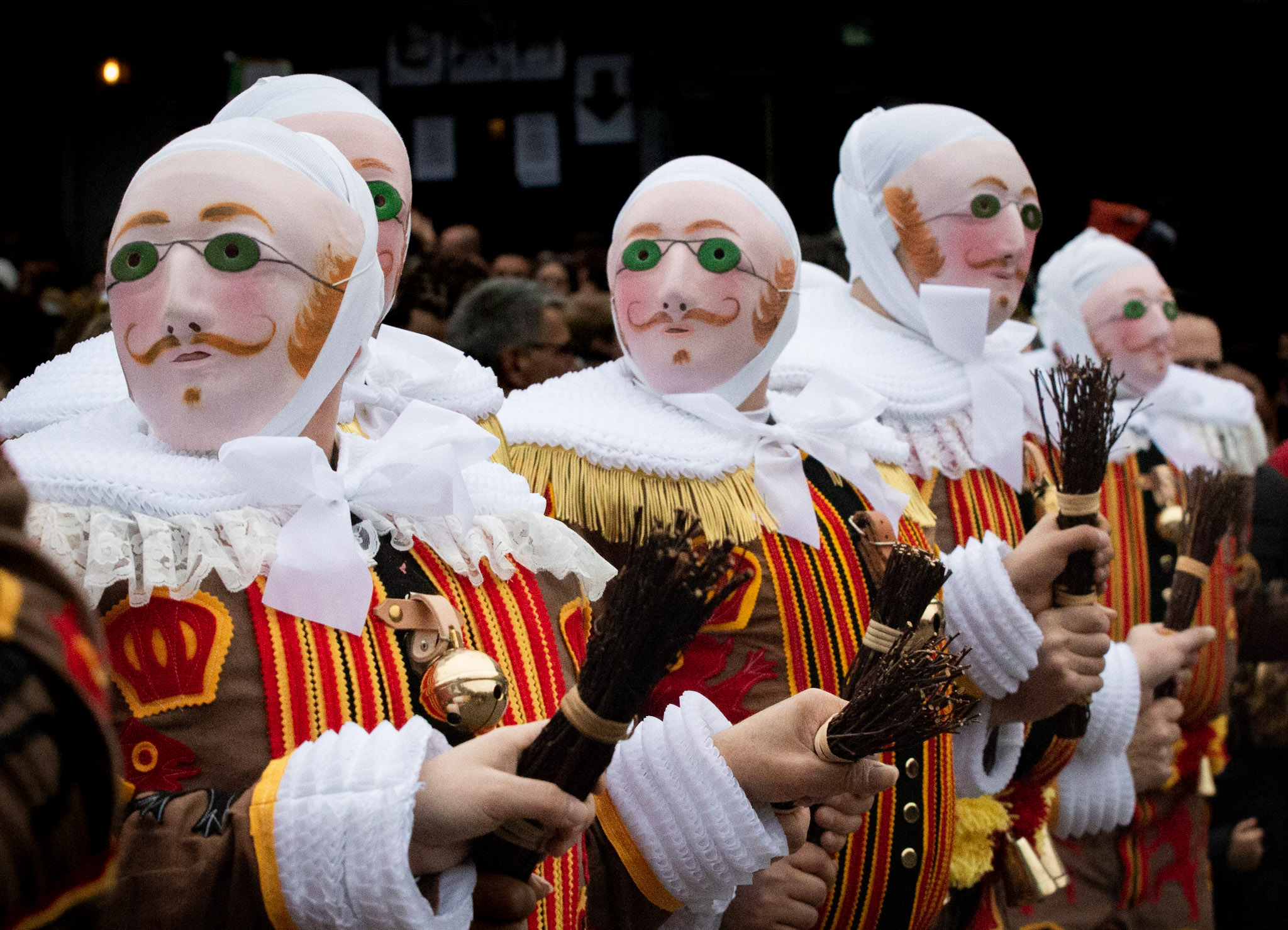
The most iconic figures of Binche are the Gilles.
To become a Gille is not a casual choice. Participants must:
- Be male
- Be from Binche (or have strong family roots there)
- Belong to an official carnival society
On Mardi Gras morning, the Gilles dress in their traditional costume:
- A wax mask worn only in the morning
- A linen suit stuffed with straw to create a rounded silhouette
- Wooden clogs
- A belt of bells
- And the famous ostrich feather hat (worn later in the day)
The costume is not decorative. Every element has symbolic meaning.
The Gilles march through the streets to the sound of drums, performing a ritual dance that has been transmitted through generations.
The Ritual of the Oranges
In the afternoon, the Gilles carry wicker baskets filled with oranges.
They throw them generously into the crowd.
The orange symbolizes prosperity and good fortune. Refusing one is considered disrespectful. Keeping it is said to bring luck.
This act transforms the carnival into a shared exchange between participants and spectators.
More Than a Parade
Unlike many European carnivals, Binche has no commercial floats, no sponsored trucks, no external performers.
Everything is local.
The town itself becomes the stage. Families open their homes. Costumes are prepared collectively. Drummers rehearse for weeks.
It is a deeply communal celebration.
The UNESCO recognition does not celebrate aesthetics alone. It recognizes:
- Oral transmission of knowledge
- Collective memory
- Ritual continuity
- Community involvement
This is intangible heritage in its purest form.
Why It Matters Today
In an era of fast tourism and standardized festivals, the Carnival of Binche represents resistance.
It shows that authenticity is not created — it is preserved.
For Wallonia, it is one of the strongest symbols of regional identity.
For travelers, it offers something rare: participation in a tradition that exists independently of tourism.
But understanding it requires context. Without historical and cultural insight, it can be reduced to colorful costumes and orange throwing.