An Intimate Journey into the Underground World of Wallonia

Beneath the quiet forests of southern Wallonia lies a hidden world shaped not by human hands, but by water, time, and silence.
The Cave of Neptune, located near Couvin in the Entre Sambre et Meuse region, is not among the largest cave systems in Europe. It does not overwhelm visitors with monumental chambers on a dramatic scale. Instead, it offers something rarer: intimacy.
Entering the cave is not simply stepping underground. It is crossing a threshold into geological time.
The limestone formations that define this subterranean landscape began forming hundreds of millions of years ago, during the Devonian period, when this region lay beneath a tropical sea. Over immense stretches of time, water slowly dissolved the rock, carving galleries, tunnels, and chambers in near-total darkness. What remains today is the patient work of nature sculpted by erosion drop by drop.
Inside, the atmosphere shifts immediately. The temperature stabilizes. Sound softens. Light becomes selective and precious.
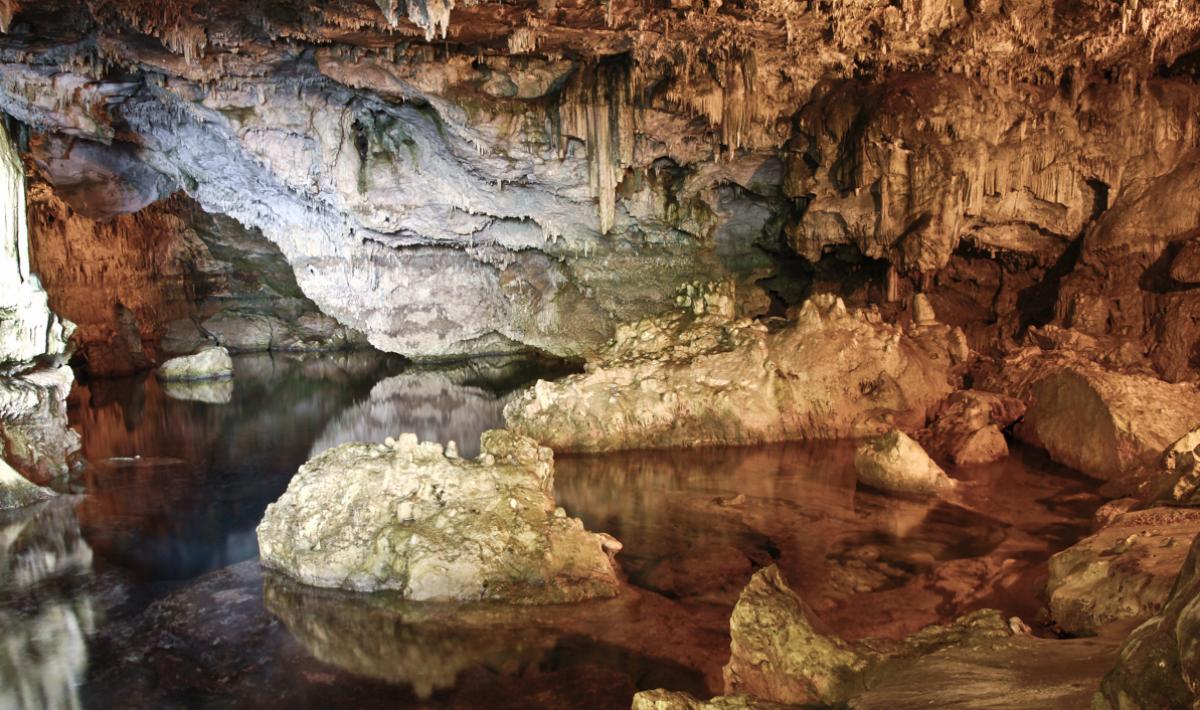
Stalactites descend from the ceiling like frozen drips of stone. Stalagmites rise slowly from the ground, formed by mineral deposits accumulating over centuries. Some meet in the middle, forming columns that appear almost architectural, though no architect designed them. The cave does not feel chaotic; it feels composed, as if shaped by a silent logic.
What makes the Cave of Neptune particularly memorable is the underground river that flows through it. Visitors do not simply walk along marked paths. Part of the journey unfolds by boat, gliding quietly over dark water beneath low rock ceilings. The movement is slow, deliberate. Reflections shimmer on the stone walls, creating an atmosphere that feels both ancient and suspended in time.
The name “Neptune” evokes mythology, yet the true power of the place lies not in legend but in sensory experience. There is a kind of enforced mindfulness underground. Without natural light, without phone signals, without outside noise, attention sharpens. You become aware of textures, humidity, echoes, and the subtle variations in rock color.
Unlike vast cave systems designed for mass tourism, the Cave of Neptune retains a human scale. The visit feels close, almost personal. You are not dwarfed by monumental emptiness; you are invited into a confined and protected world. This intimacy creates a different relationship with the environment. The cave is not a spectacle to consume but a space to move through carefully.
Beyond its visual appeal, the cave is also a fragile ecosystem. Subterranean environments evolve slowly and can be easily disturbed. Responsible visitation is therefore essential. Preserving these geological formations requires respect for their vulnerability — what took thousands of years to form can be damaged in a single careless gesture.
In the broader context of Wallonia, the Cave of Neptune reflects the region’s geological richness. The limestone plateaus of the Entre Sambre et Meuse area hide multiple underground systems, reminding us that landscapes extend far beyond what we see on the surface. The forest, the valleys, and the cliffs above ground are only part of the story.
Descending into the cave reveals another dimension of the territory one shaped by patience, erosion, and hidden watercourses.
To visit the Cave of Neptune is not merely to tick off a natural attraction. It is to experience a quieter form of discovery. In a world that often favors scale and spectacle, this underground journey offers something more subtle: proximity, stillness, and perspective.
And sometimes, that intimacy leaves a deeper impression than grandeur ever could.